Pillow guide · Sleep essentials
How to Choose a Pillow for Your Sleep Position, Loft, and Support Needs
The right pillow is less about cloud-like softness than a quiet, considered balance: enough loft to fill the space beneath your head, enough support to keep your neck comfortable, and a fill that responds in a way you enjoy. Here’s how to find the pillow that feels made for the way you sleep.
A pillow can be the smallest element in a bed and the one you notice most. Too lofty, and your head may feel tipped upward; too flat, and it can seem to fall back toward the mattress. A pillow that feels sumptuous in the shop may compress quickly at home, while a firmer style can prove more comfortable once you settle into it. The decision involves more than softness: sleep position, shoulder width, mattress feel, pillow loft, fill, and personal preference all have a part to play.
There is no single pillow that works for everyone who sleeps on their side, back, or stomach. Instead, think of pillow selection as a small exercise in alignment and comfort. Your goal is to support the natural position of your head and neck without creating a sense of strain or pressure. The right choice should feel comfortable when you lie down and remain comfortable as the pillow responds to your weight during the night.
Start with the way you actually sleep
Your usual sleep position is a useful starting point, not an unbreakable rule. Many people change positions overnight, so consider the one in which you spend the most time, then think about how often you turn. A pillow selected for a single, fixed posture may feel less accommodating if you move frequently.
Side sleeping
Side sleepers often need more loft than people who sleep on their backs, because the pillow has to fill the space between the outer shoulder and the head. The precise amount depends on your proportions, mattress, and how much the pillow compresses. A broad-shouldered sleeper on a firm mattress may need a different profile from someone with narrower shoulders on a mattress that allows the body to sink more deeply.
When lying on your side, look for a pillow that supports your head without pushing it upward or letting it angle down toward the mattress. The aim is a comfortable, relatively level line through the head and neck. If the pillow collapses under pressure, its initial height may be misleading; a thick pillow is not necessarily a supportive one.
Back sleeping
Back sleepers commonly prefer a medium loft, though the best fit is personal. A pillow should cradle the head while leaving the neck comfortable, rather than forcing the chin toward the chest or allowing the head to fall backward. Some people enjoy a gently contoured surface; others prefer a more traditional shape with an even profile. What matters is how the pillow feels once your head is resting on it, not how sculpted it appears on a shelf.
Consider your mattress as part of the equation. A softer mattress may let the shoulders and upper body sink farther in, which changes the gap the pillow needs to fill. A firmer sleep surface may create a different relationship between the head and the mattress. Pillow support is therefore not an isolated feature: it works together with the bed beneath you.
Stomach sleeping
Stomach sleepers often find a lower-loft, softer pillow more comfortable because it limits how far the head is lifted from the mattress. A tall, firm pillow can feel as though it twists the neck upward, while a flatter option may better suit this posture. Some stomach sleepers use no pillow beneath the head, or place a pillow under the upper body instead; comfort varies, and there is no requirement to use a particular arrangement.
If you sleep on your stomach and also turn onto your side, a very flat pillow may feel insufficient during those stretches. In that case, consider how much you move and whether a flexible, compressible fill suits you better than a rigid, consistently high profile.
Loft is height in use, not just height on the shelf
In pillow language, loft describes the pillow’s height. But what you experience is its loft under pressure: how high it remains when your head rests on it. Two pillows that look equally full can feel quite different once compressed. Fill type, construction, density, and the way the pillow is sewn all affect how it behaves.
Assess loft by lying down in your usual position, ideally on a surface similar in firmness to your bed. Notice whether your head feels level and whether you find yourself adjusting the pillow repeatedly. A pillow that needs constant folding, bunching, or pushing back into shape may not be giving you the support you want. A brief test cannot replicate a full night, but it can reveal whether the basic height feels promising.
Adjustable pillows offer another route. Some allow you to remove or redistribute fill, so you can change the loft instead of committing to one fixed profile. This can be useful when your preferences are uncertain or when you sleep in more than one position. Adjustment is not a guarantee of comfort, however: a pillow still needs a fill and texture that feel right to you.
Support and firmness are related, but not identical
Firmness describes the feel of a pillow; support describes how effectively it holds its shape and keeps your head comfortably positioned. A soft pillow can be supportive if it retains enough structure for your needs. A firm pillow can feel uncomfortable if its height or surface does not suit your posture. These terms are often used loosely in product descriptions, so whenever possible, focus on the experience rather than the label.
Pay attention to what happens after the first few minutes. Does the pillow sink substantially? Does it spring back when you shift? Can you settle into it without feeling pushed away from the mattress? Some sleepers prefer a cushioned, yielding feel; others want a more stable platform. Neither preference is inherently better. The best pillow is the one that provides a comfortable balance for your body and sleeping habits.
Support can also change with age and use. Fill may flatten, shift, or lose resilience over time, and a pillow that once felt suitable may begin to need frequent fluffing or repositioning. Regularly check whether it still returns to its shape and whether you remain comfortable. Care instructions and replacement timing vary by material and construction, so follow the maker’s guidance rather than relying on a universal schedule.
Compare pillow fills by feel and care
Fill influences softness, responsiveness, weight, airflow, and maintenance. No material is automatically the most supportive: construction and amount of fill matter, and the same category can contain pillows with very different sensations.
- Down and feather: These fills are often chosen for their soft, moldable feel. They can be shaped by hand, which some sleepers appreciate, but may need regular fluffing to maintain an even profile. Check care instructions and any relevant material or sourcing information before choosing.
- Memory foam: Foam pillows may contour around pressure and feel more structured than loose-fill styles. They vary in responsiveness, firmness, and ventilation. A contoured design is not automatically a better match; it should feel comfortable for your posture and preferred loft.
- Down-alternative and other synthetic fills: These can offer a soft, familiar feel and may be available in washable formats, though care requirements differ. Compare how the fill is distributed and whether the pillow is designed to retain its loft.
- Latex and other resilient fills: Some sleepers like a springier, more buoyant response. The feel depends on the pillow’s shape and construction, so try it rather than assuming that a material name predicts comfort.
- Adjustable fill: Pillows with removable or shiftable fill allow you to refine height and density. They can be practical when you want more control, provided the pillow remains comfortable after adjustment.
Read the care label before purchasing, especially if routine washing is important to you. Some pillows can be laundered as a whole, while others require spot cleaning, airing, or professional care. A removable cover can make day-to-day maintenance easier, but it does not necessarily mean the pillow itself is washable. Use a pillow protector if appropriate, and follow the manufacturer’s directions to help preserve the fill and construction.
Think about temperature, texture, and the cover
Comfort is tactile as well as structural. A pillow can have a promising loft and still feel wrong if it sleeps too warm, has a surface you dislike, or makes a rustling sound as you move. If temperature is a concern, consider the fill and cover together. Breathability depends on the complete construction and your bedding environment, not on a single marketing phrase.
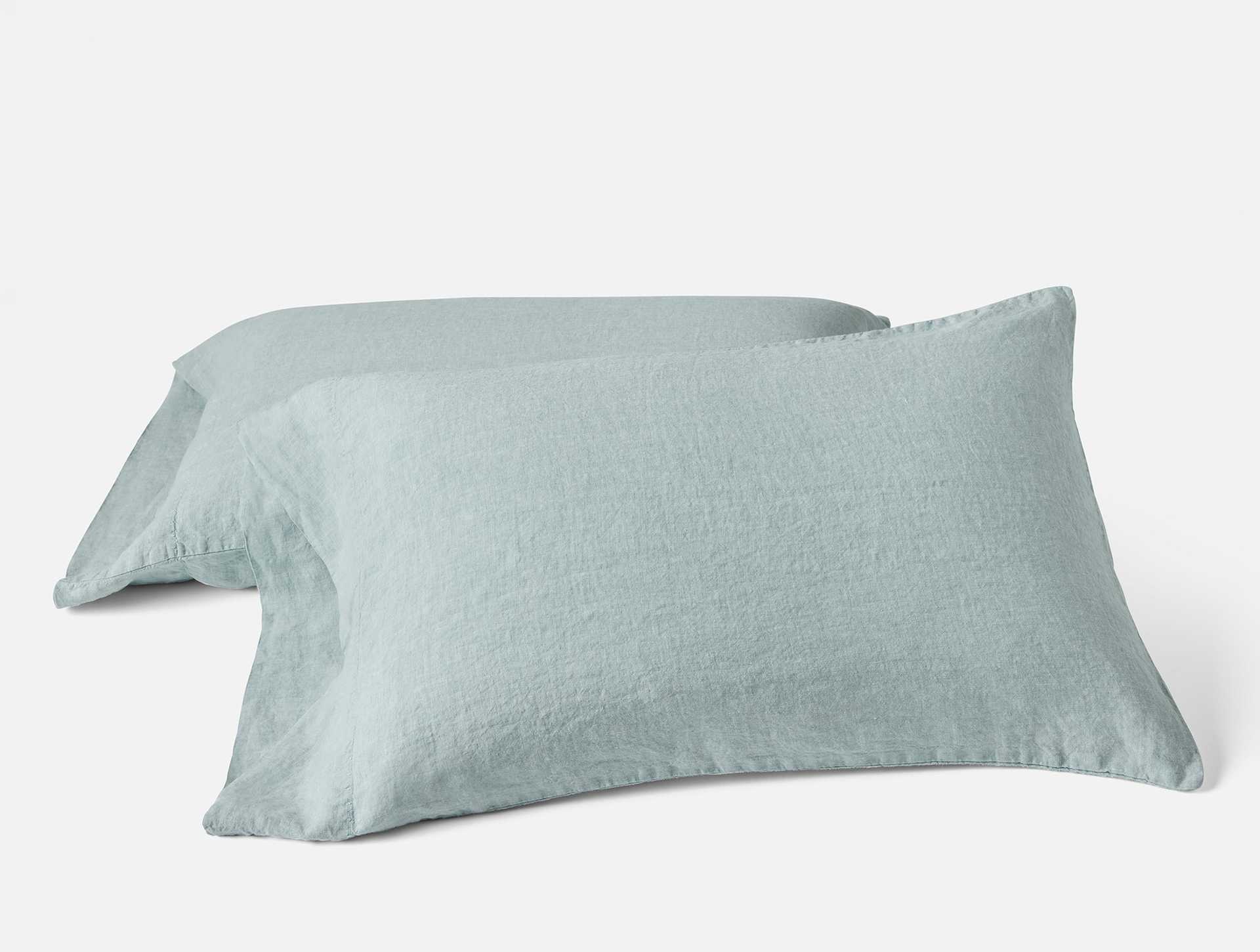
The pillowcase is the layer closest to your skin. A crisp cotton percale case can feel cool and smooth, while linen offers a more textured hand that softens with laundering. These choices do not change the pillow’s loft, but they can influence the sensation of settling into bed. For example, Organic Relaxed Linen Pillowcases are made from GOTS-certified organic flax linen woven in Portugal, with a relaxed feel, pick-stitched cuffs, and care instructions calling for a cold, gentle wash and low tumble drying. They are pillowcases, not pillows, but illustrate how the fabric surrounding a pillow contributes to the overall sleep experience.
For a more polished cotton finish, Platinum Pillowcases are made from extra-long-staple cotton percale in Italy, with three embroidered lines and a simple hem. Their lukewarm delicate-cycle care instructions offer a reminder to treat the cover according to its own fabric and finish, independently of the pillow beneath it. In either case, check the dimensions and closure style so the case fits the pillow without pulling tightly or leaving excess fabric that bunches around your face.
A practical fitting test at home
Once you have a candidate pillow, give it a fair trial. Use it with your usual mattress, sheets, and pillowcase, and spend time in your normal sleep position. A different surface or an unfamiliar cover can alter the initial impression. If possible, choose a retailer with a clear trial or return policy, and keep the product’s care and return requirements in mind.
- Settle into your usual posture. Let the pillow bear your head’s weight naturally instead of arranging it into a shape you would not maintain overnight.
- Notice the height. Ask whether your head feels comfortably positioned or whether the pillow seems to tip it forward, backward, or sideways.
- Check the response. Shift as you normally would. Does the pillow recover, compress gradually, or lose its shape in a way that bothers you?
- Consider pressure and texture. Look for points of discomfort and consider whether the cover feels pleasant against your skin.
- Repeat the test over several nights if the policy allows. The first impression matters, but familiarity can reveal whether the pillow remains comfortable through normal use.
Keep the rest of the sleep setup in view. Mattress firmness, room temperature, bedding layers, and your own habits all influence how a pillow feels. If you are changing several elements at once, it can be difficult to tell which one improved or disrupted comfort. Adjusting one variable at a time makes comparison more useful.
Common pillow-shopping mistakes
Choosing by softness alone. A pillow may feel inviting in the store but compress too far for your preferred sleeping position. Consider its loft under pressure, not just its hand-feel.
Assuming thicker means more supportive. A high pillow may suit some side sleepers, but height is only helpful when it fills the space comfortably. Too much loft can feel as unsuitable as too little.
Using thread count as a pillow-support measure. Thread count relates to fabric construction, not the pillow’s loft or ability to hold your head. Assess the pillow and its cover as separate components.
Ignoring the mattress. The sleep surface changes how far your body settles and therefore how much space the pillow needs to bridge. A favorite pillow may feel different on another bed.
Expecting one pillow to fix every discomfort. A pillow is one part of a broader sleep environment. Persistent pain, numbness, or other concerning symptoms deserve advice from a qualified health professional; product selection is not a substitute for diagnosis or treatment.
A concise decision framework
If the choices begin to feel endless, narrow them in this order: identify your most common sleep position; estimate whether you need low, medium, or higher loft; decide whether you prefer a yielding, resilient, or more structured feel; then compare fill, temperature, and care needs. Finally, check size, return terms, and whether the pillow fits the cases you already own.
For side sleepers, begin by testing enough height to fill the shoulder-to-head gap without forcing the head upward. For back sleepers, look for a profile that cradles the head while keeping the neck comfortable. For stomach sleepers, start with a lower, more compressible option. Treat these as starting points rather than prescriptions: body proportions, mattress response, and individual preference can shift the ideal pillow in either direction.
There is an appealing simplicity to a pillow that disappears into the night—not because it is unimportant, but because its height, support, and texture feel so natural that you stop negotiating with it. A thoughtful choice balances the way you sleep with the way you like to rest. Try to judge the whole experience, from loft and fill to breathability and maintenance, and let comfort—not a fashionable label or a single specification—make the final decision.
The pillow checklist
- Choose a starting loft based on your usual sleep position and body proportions.
- Evaluate height while the pillow is compressed beneath your head.
- Separate the ideas of softness, firmness, and support.
- Compare fill for response, temperature, and care requirements.
- Test the pillow with your own mattress and bedding when possible.
- Check dimensions, case fit, cleaning directions, and return terms.